13 Jan 2016

Activities thursday and friday


diagramatic plan , chilhood space, Xiaoyu Xu, 2014 BAS


Activities for thursday and friday are as follows :

studio cleaned, with new wall and cover for waste bins (hopefully);
All (or most) material produced hung up on studio walls - as thight as possible, does not need individual sections - mix stuff for new views. (remember A4 portrait, A3 landscape- always). use bluetack/elefant snot from tiger or similar. no tape.
models produced on display on tables or on one long table on 4th. floor. 
Thursday (start ca. 10:00) will be about staudio space, common topics for course/other activities/schedule ajustments(!), and individual tutorials. Friday reviews of chilhood spaces booklet (one hard copy for each, printed and bound/glued with the gray cover/back, and a running .pdf for each (two pages) collected on a common memory stick/laptop. and at end of day intro to next phase.

Something "old" and something "new"


In this post, two quite crutial short books or pamplets are introduced: Paul Klee's Pedagogical Sketchbook and Juhani Pallasmaa's The Eyes of the Skin. Both works are foundation knowledge in architectural studies, so if you have not yet been aquainted to them yet, this semester gives a possibility for re-viewing.

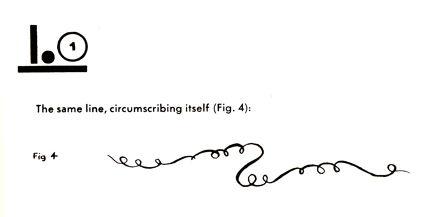
The Pedagogical Sketchbook by Paul Klee is an intuitive art investigation of dynamic principles in visual arts from his teaching at the Bauhaus Shool in the 1920's. Klee takes his students on an ‘adventure in seeing’ guiding them step-by-step through a challenging conceptual framework. Objects are rendered in a complex relation to physical and intellectual space concepts. It is an exercise in modern art thinking. In her introduction to the book, Sibyl Moholy-Nagy divides the book into 4 different parts corresponding to the 4 conceptual frameworks. Each framework is illustrated by intricate drawings (mixture of what looks like creative arithmetic or geometry sketches, scribbles and mental notes).

The Eyes of the Skin is the "gentle manifesto" that grew out of the Finnish architect, teacher, philosopher, and designer Juhani Pallasmaa's concern about the "dominance of vision and the suppression of other senses in the way architecture was taught, conceived and critiqued." Originally published in 1996, this influential pocket-sized book ( 12 x 21 cm, Pallasmaa's essay is only 60 pages). Pallasmaa's call for a non-ocular-centric architecture that responds to existential human questions—rather than one weighted down by discourse for its own sake—is timeless.

Both books are available at the BAS library. Otherwise below are two links to .pdf downloads, reachable here (Klee) and here (Pallasmaa)

8 Jan 2016

Suggested readings for next week


From time to time, we will post links to some shorter texts. They are meant as inspirations as well as basic foundation and  general knowledge in an architectural education. Please take note and read them. 

The followings texts are: A short text by Heidegger on " Building, Dwelling and Thinking " HERE, a copy of Georges Perec's " Species of Spaces" HERE and a short text on Rachel Whiteread's monumental scuplture "House" and its contextualisation withing other related works HERE. 

Enjoy the "readings": it is also part of studio work and can serve as a fine activity while listeming to some music. (You might try some Cage on Spotify or other streaming)

Remember the Cage "rules"


" There is no such thing as an empty space or an empty time. There is always something to see, something to hear. In fact, try as we may to make a silence, we cannot." JC

30 Dec 2015

First post // thank you for fine intro

Thank you for the fine pecha-kucha intros this week. Very inspiring and informative. As promised the blog starts with this post, and will be followed up on a regular basis with pictures from work in progress in studio, archive of asingments and various inspiring texts/other relevant material during the whole semester.


First day in studio. Enjoy the daily changes during the semester : it is such a fine space. Trust it for that while as John Cage suggested.


'
Semester schedule and phase one, first task available above for print and download. Click on icon to enlearge.